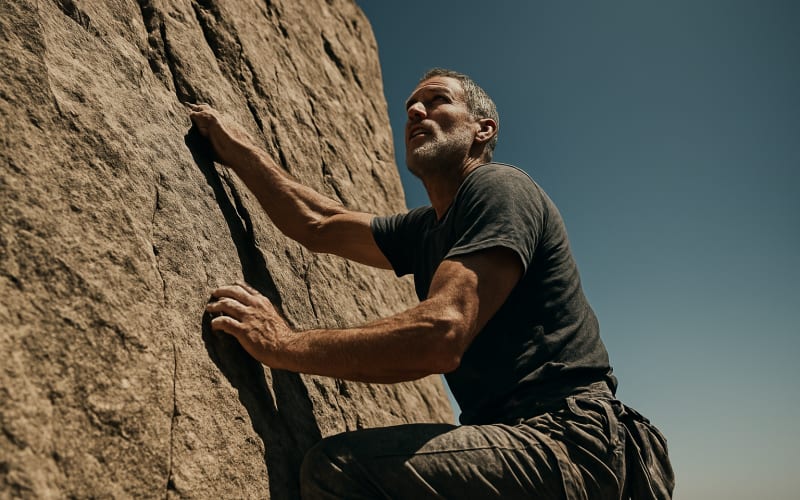
There's a debate that's been going on in climbing gyms and crags across the country for years now, and honestly, it doesn't look like it's dying down anytime soon. Bouldering versus sport climbing. Which one actually makes you a better climber? Not just stronger, not just more flexible — but a genuinely well-rounded, technically sound climber who can handle whatever the rock throws at you.
I've spent a fair amount of time on both sides of this argument, and I'll tell you right now — there's no clean answer. But there is a better one, and by the end of this, you'll know where I stand and why.
What We're Actually Talking About
Let's get clear on the basics before we dig in.
Bouldering is climbing without ropes. You work short, intense problems — usually no more than 15 to 20 feet off the ground — on crash pads. The moves are hard, often brutally so, and the whole thing can be over in seconds. It's raw, physical, and sometimes humbling in a way that sport climbing just isn't.
Sport climbing is rope climbing on routes that are pre-bolted into the rock. You clip your rope into protection as you go up, and the routes are much longer — anywhere from 30 feet to well over 100. It takes endurance, route-reading, and a different kind of mental toughness.
Both disciplines are rock climbing. But they train your body and your brain in very different ways.
The Case for Bouldering
I remember the first time I walked into a bouldering gym. I'd been sport climbing for a couple years at that point and thought I was doing pretty well. Then I watched a guy who looked like he'd never lifted a weight in his life cruise through a problem that I couldn't get off the ground on. That was a wake-up call.
Bouldering is where you build raw strength. Period. The short, powerful nature of the problems forces your body to recruit muscle fibers and develop contact strength — that snap in your fingers and forearms when you grab a hold and need it to stick immediately — in a way that longer sport routes just don't demand in the same way.
It also builds body awareness like nothing else. When you're working a hard boulder problem, you're constantly experimenting. You try a move twenty times. You figure out the exact hip position that makes it work. You learn how your body moves through space. This is sometimes called "movement vocabulary," and boulderers tend to develop it faster than sport climbers because every single move on a boulder problem matters. There's no shaking out on a jug halfway up a route and recovering. Every move is hard.
The problem-solving aspect is real too. A tough boulder problem is basically a puzzle. You look at it, you figure out a sequence, you try it, it fails, you adjust. Rinse and repeat. That kind of thinking transfers directly to reading hard sections on sport routes, so it's not like bouldering keeps you in a box.
The community is also worth mentioning. Bouldering gyms tend to have a pretty tight-knit, social vibe. People sit around the same problem for an hour, share beta, cheer each other on. It's laid back and competitive at the same time, and a lot of guys who get into it late in life find it surprisingly easy to fit into.
The Case for Sport Climbing
Here's the thing though — sport climbing teaches you something bouldering can't, and it's something that matters more than most people want to admit: how to keep climbing when you're tired.
Endurance is a completely different skill than strength. You can be absolutely jacked from bouldering and fall apart on a 60-foot sport route because you've never trained your forearms to keep firing under sustained load. Sport climbing forces you to manage your energy, shake out at rests, pace your breathing, and stay calm when your arms start pumping out. That's a mental and physical skill that takes real time to build.
Route reading on longer routes is also its own discipline. On a boulder problem, you can see almost every hold before you start. On a sport route, especially outdoors, you're often making decisions in real time, 40 feet off the deck, trying to figure out where the route goes and where you can rest. That kind of in-the-moment thinking under fatigue is something you just can't replicate on a boulder problem that's done in 10 seconds.
Then there's the head game. Fear management is huge in sport climbing. Learning to trust your gear, to fall safely, to push through a crux when your brain is telling you to back off — that's a real mental skill. Boulderers fall onto pads from low heights. Sport climbers take 20-foot whippers onto a rope. It's not the same thing, and getting comfortable with that exposure is part of becoming a complete climber.
Outdoors, sport climbing also opens up a bigger world. Most of the classic routes you hear about — the ones people travel to climb at Red River Gorge, Smith Rock, Rifle, Maple Canyon — are sport routes. If your goal is to explore the best climbing America has to offer, sport climbing is a big part of that picture.
Where They Actually Overlap
Here's what a lot of people miss in this debate: the best climbers in the world do both. Alex Honnold built some of his early fitness bouldering in his van-dwelling days. Adam Ondra, arguably the greatest technical climber ever, trains across every discipline obsessively. The idea that you have to pick one lane is mostly a gym rat argument.
The skills genuinely compliment each other. Bouldering builds the strength and movement quality that makes you better on hard sport route cruxes. Sport climbing builds the endurance and composure that makes you better when you're pumped out of your mind at the top of a boulder problem — wait, that doesn't happen. But the mental toughness carries over in other ways.
If you start in one discipline and plateau, the other one is often exactly the medicine you need. A sport climber who can't seem to progress on hard moves should spend a few months projecting boulder problems. A boulderer who falls apart at the top of anything taller than 20 feet needs to log time on the rope.
So Which One Actually Builds Better Climbers?
Alright, straight talk. If I had to pick one to recommend to someone who wants to become the best all-around climber they can be — especially someone starting later in life who wants to progress efficiently — I'd say start with bouldering, but don't stay there.
Bouldering gets you strong fast. It teaches you to move well. It's accessible — you don't need a belay partner, you don't need gear, you can walk into a gym and get after it. For guys who are juggling work, family, and trying to carve out time for something they're passionate about, that kind of simplicity matters.
But at some point, you've got to get on the rope. You've got to learn to climb scared, to manage endurance, to project longer routes that take weeks or months of effort to send. That's where sport climbing earns its place. And if your ultimate goal is climbing outdoors on real rock — which it should be, because there's notihng quite like it — you'll need both.
The climbers I respect most aren't the ones who are insanely strong on the wall or the ones who can endurance-grind up anything at moderate grade. They're the ones who can do it all. Move well, stay composed, read rock, manage fear, and keep getting after it year after year.
The Real Answer Is Just: Climb More
I know that sounds like a cop-out, but hear me out. The debate between bouldering and sport climbing is really a proxy for a deeper question — what should I focus on to keep improving? And the honest answer is that whatever you're not doing is probably what you need.
Stagnant boulderer? Go sport climbing. Endurance specialist who crumbles on hard moves? Go boulder. The gaps in your climbing will tell you where to spend your time better than any article will.
What this debate shouldn't do is become a reason to stay in your comfort zone. Both disciplines are great. Both have real, documented benefits. Both will humble you. Both will reward you.
Pick the one you love. Then do the other one too.
That's how you become a better climber.